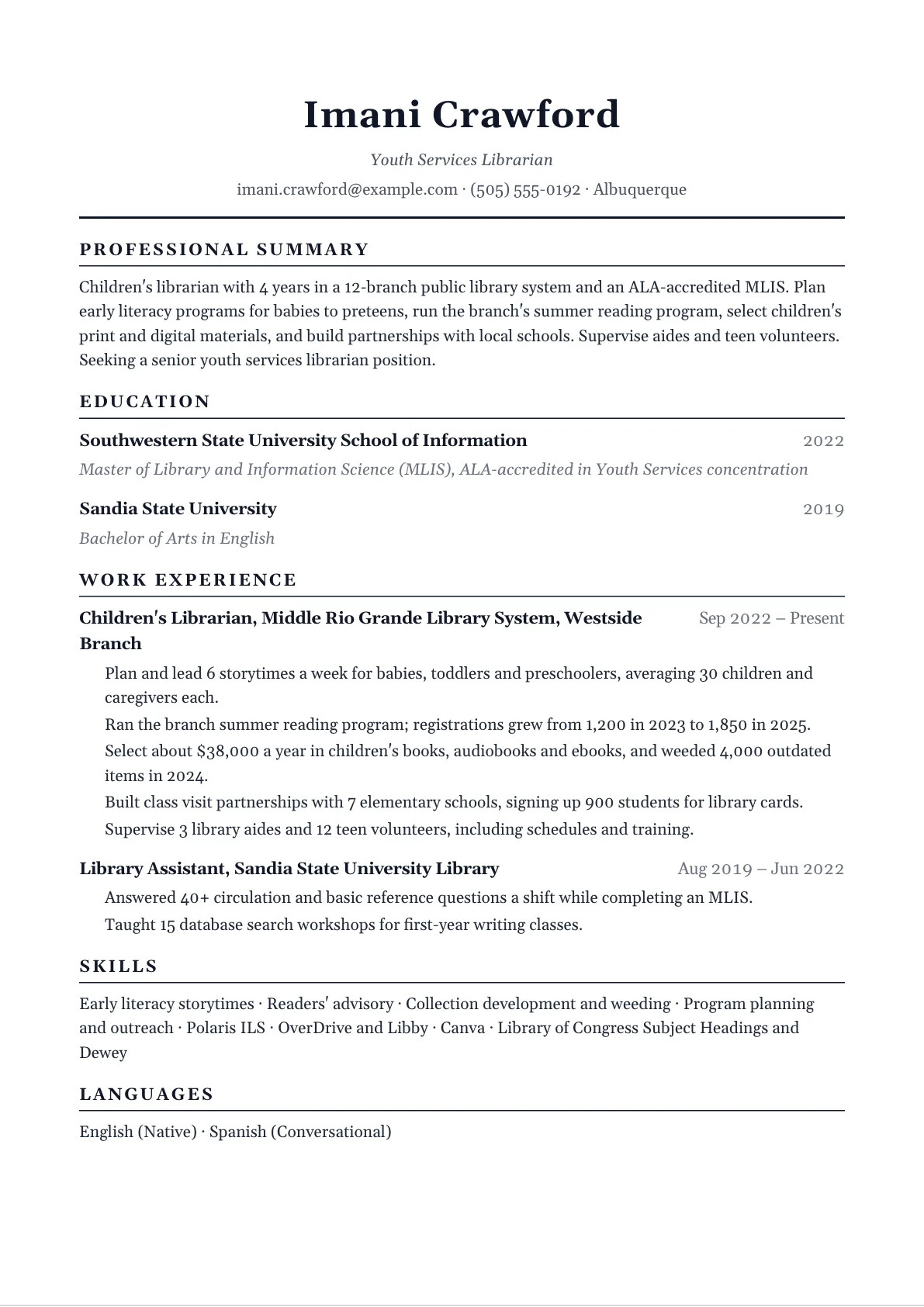
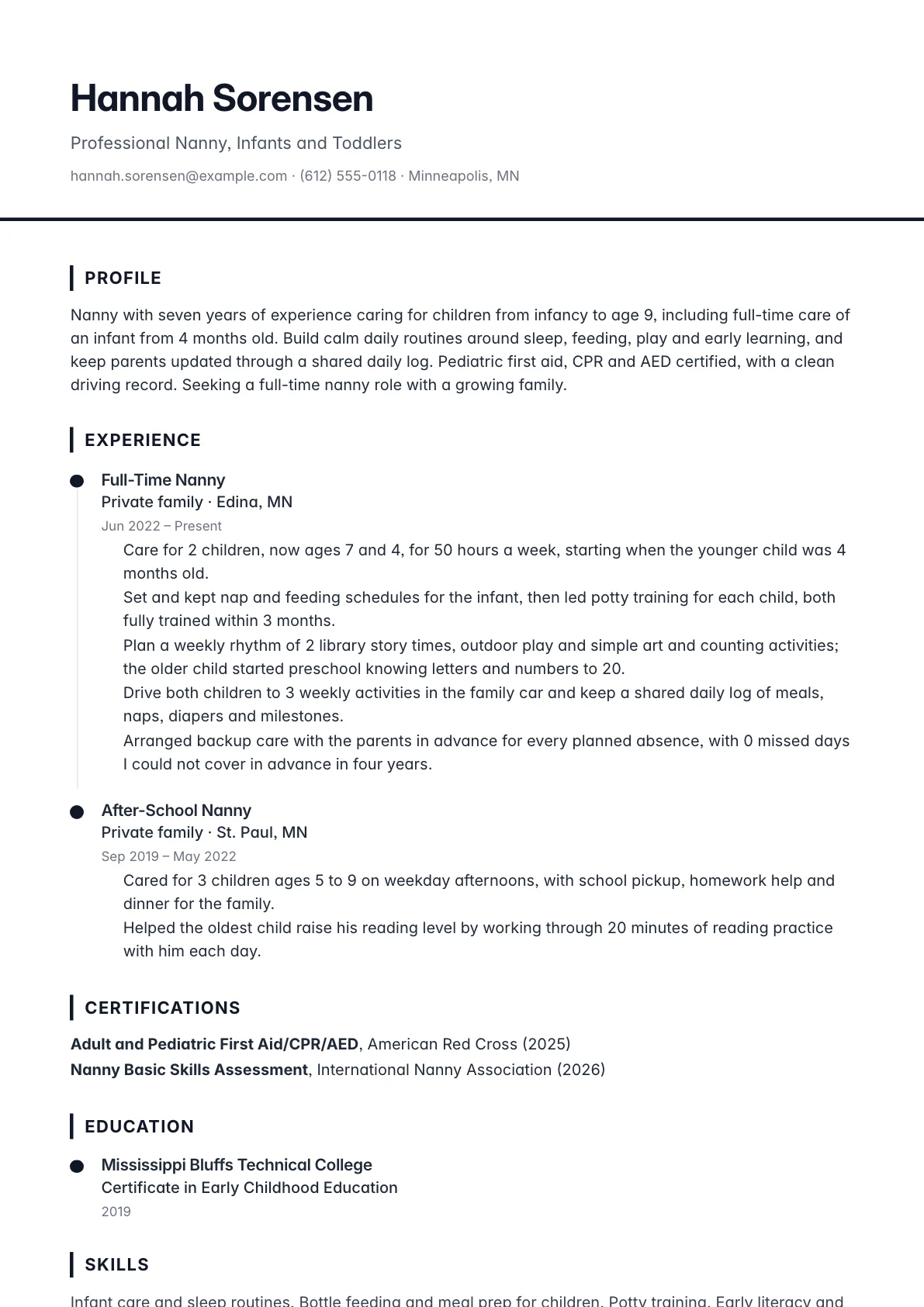
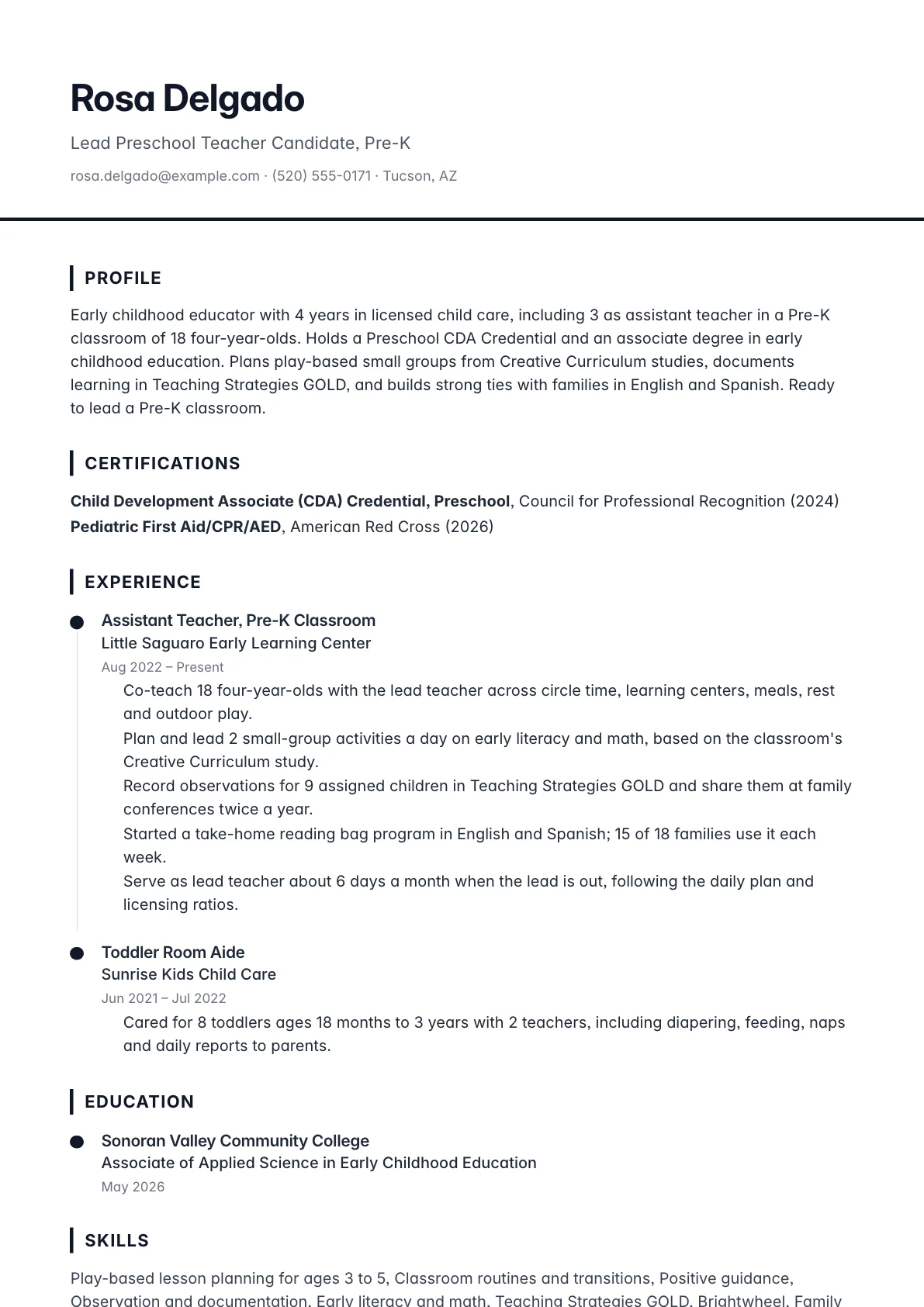
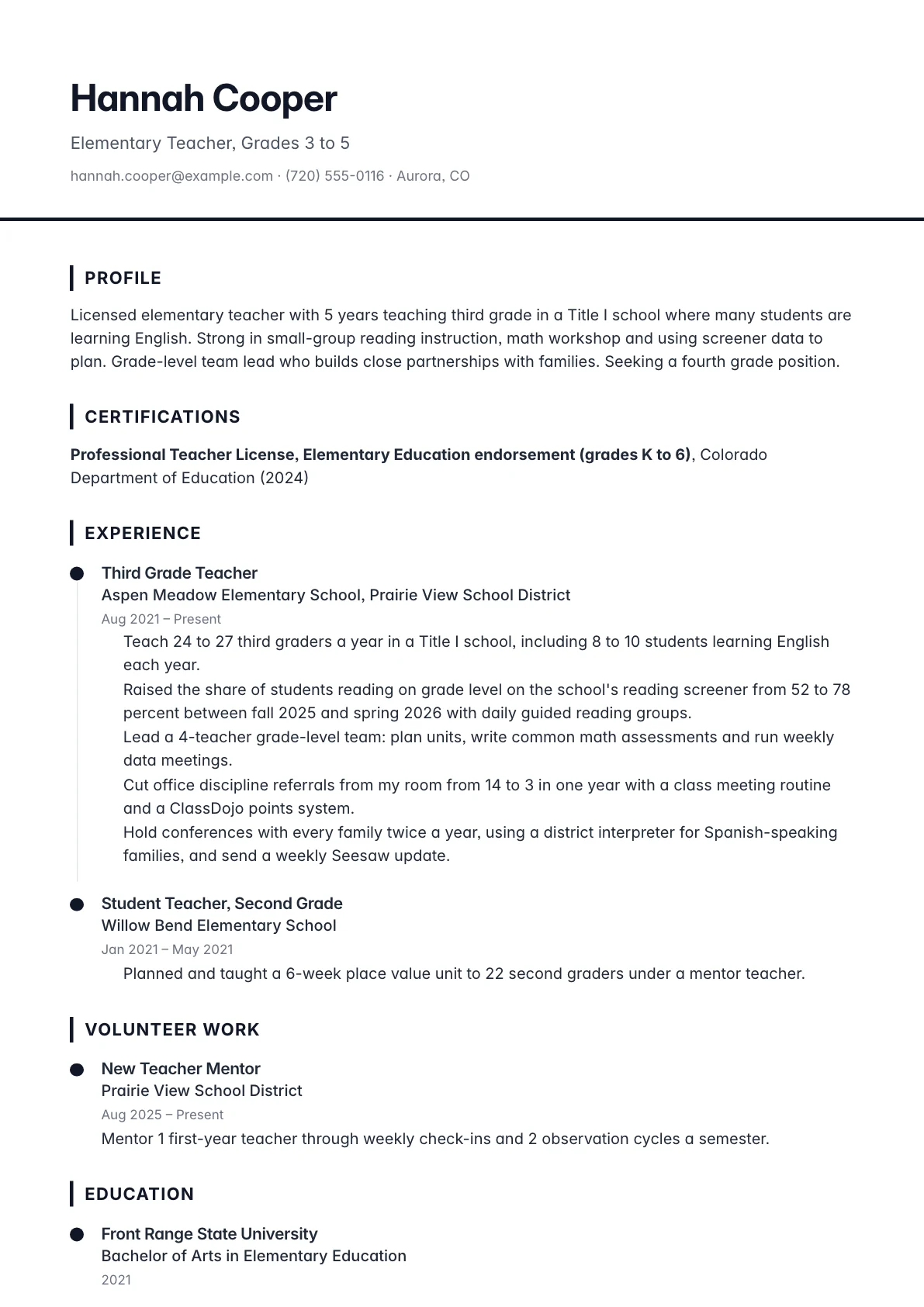
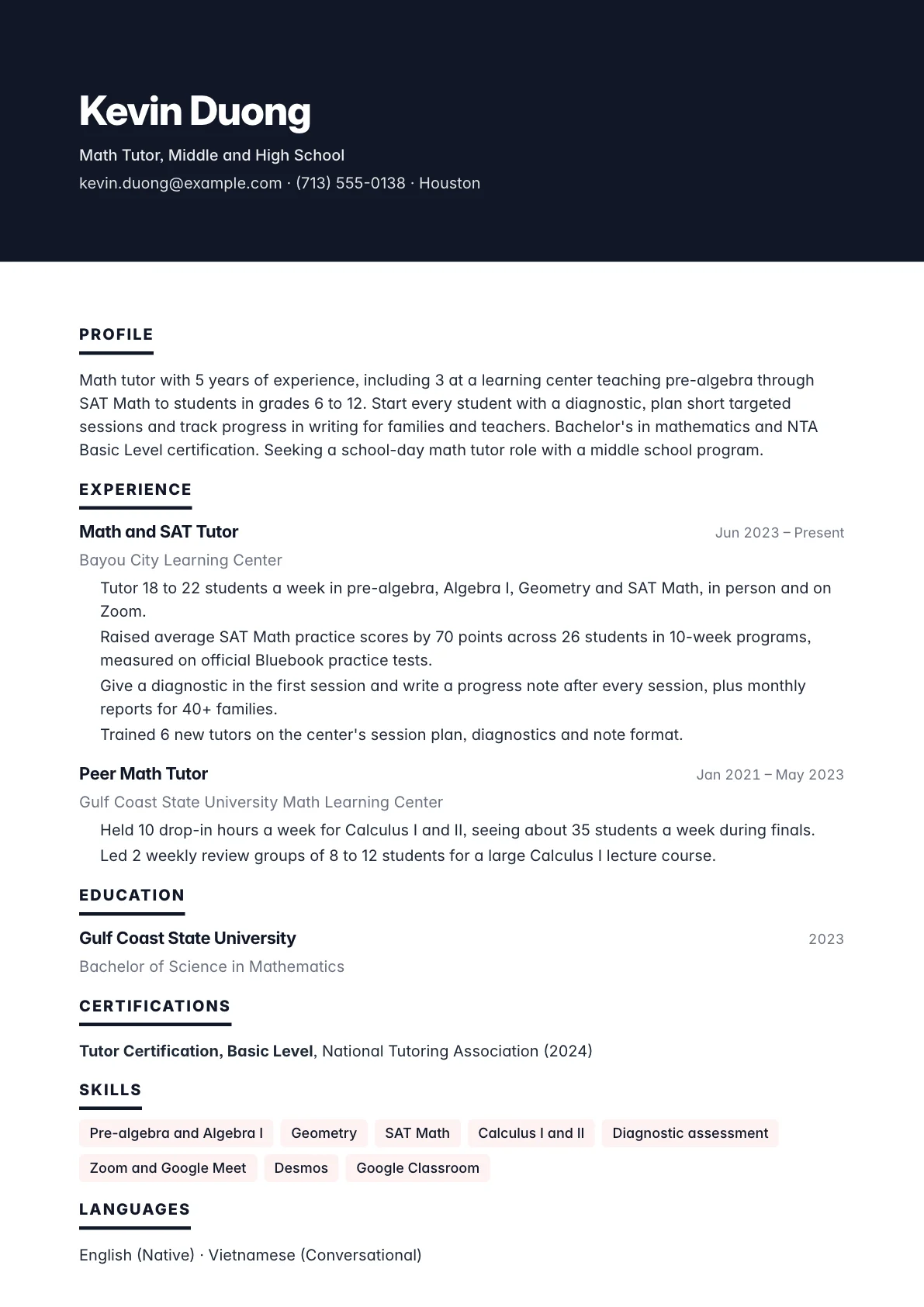
Credentials first, because they are checked first
In this group the first reader often has a checklist. A district's human resources office confirms the teaching license, a center director confirms that you meet the state's child care rules, and a library committee looks for the right degree. Only then does a principal, director or parent read for fit. Put whatever your role requires in its own section near the top, with the issuing body and the year, and write expected with a month if it is still in progress.
What that section holds depends on the job:
- Teacher: public school teachers need a state teaching license (some states call it a certificate) for their grades and subjects. According to the Bureau of Labor Statistics, it generally involves a bachelor's degree, a teacher preparation program with student teaching, a background check and exams, and every state offers an alternative route for people who already have a degree. Many private schools do not require a license.
- Preschool teacher: each state sets child care licensing rules, including staff qualifications and training, as Childcare.gov explains. The Child Development Associate (CDA) Credential from the Council for Professional Recognition is the one to list, with its setting, and public school Pre-K teachers generally need a state teaching license.
- Librarian: most professional librarian jobs ask for a master's degree in library and information science, and many employers want it from a program accredited by the American Library Association. School librarians typically also need a teaching certificate, with rules set by each state.
- Tutor: most tutoring jobs need no license. Employers look for subject knowledge and some college coursework, and some prefer licensed teachers. National Tutoring Association certification is optional.
- Nanny: there is no license for private nanny work, and the American Red Cross notes that no formal training is required. Families and agencies still expect pediatric first aid and CPR, a background check, and a clean driving record if you will drive the children.
Show who you taught or cared for
A kindergarten room, a high school chemistry lab, a toddler classroom and a family with a newborn are different jobs. Give every entry its setting and scale: the grade or ages, the number of students or children, the type of school, center or program, and the subject. Taught 24 third graders in a Title I school lets a principal place you at once. For nanny work, write Private family and the city instead of the family's name, then give the number and ages of the children.
Then show how you teach or care, in the words the posting uses: the reading or math approach, the curriculum (Creative Curriculum, HighScope, Montessori), the assessment tools, support for English learners and students with IEPs, the library system you run, or the daily routines you keep. List a second language too: many schools, centers and families serve children who speak another language at home.
Results you can stand behind
Student growth is the result people most want to claim and the easiest to overstate. Name the measure (a reading screener, a district benchmark, practice test scores, course grades), the number of students and the time period, and report only what you tracked yourself. Principals and parents can ask to see the data, and a guaranteed score gain reads as a red flag.
Other jobs here have their own numbers. Librarians report program attendance, circulation, new library cards and grants. Preschool teachers can count developmental screenings completed, families reached through a parent app and turnout at family events. Nannies show years with each family, which parents read as trust. For every role, one line about families and one about colleagues matters: schools and centers hire for the whole team.
Which example should you start from?
- From home care to a classroom. A nanny or babysitter moving into a center should start from the preschool teacher example and keep family work as proof of experience with young children.
- From tutor to teacher. Once you are licensed, use the teacher example and list tutoring as related experience, with student teaching treated like a job.
- From classroom to library. A teacher who has earned a library degree should start from the librarian example and keep the teaching license near the top, since school librarians typically need a teaching certificate as well.
- Into teaching from another career. Every state offers an alternative route for people with a bachelor's degree. Pair the teacher example with the career change guide.
- Tutoring while in college. The college student guide covers the rest of your page.
The education job market in numbers
The U.S. Bureau of Labor Statistics projects employment in educational instruction and library occupations, which include teachers, preschool teachers, tutors and librarians, to grow slower than the average for all occupations from 2025 to 2035, with about 871,900 openings a year. The group's median annual wage was $60,570 in May 2025, against $50,980 for all occupations. Nannies are counted as childcare workers, part of personal care and service occupations, a group projected to grow about as fast as the average, with about 714,700 openings a year and a median wage of $36,410. The table above compares each job on this page.
Frequently asked questions
Where does a teaching license go on a resume?
In its own section right after your summary, with the license level, subject or endorsement, grade range and the state agency that issued it. If it is pending, write expected and the month.
Can I get a teaching job without a teaching degree?
It is possible. Every state offers an alternative route to a license for people who already have a bachelor's degree, and many private schools hire teachers without a state license. Your state's department of education or teacher standards board describes its route.
How do I list a CDA Credential?
Give the full name, Child Development Associate (CDA) Credential, the setting such as Preschool or Infant-Toddler, the Council for Professional Recognition as the issuer, and the year. If you are working toward it, write in progress with the expected date.
Do nannies and tutors need a certification?
No license is required for private nanny work or most tutoring. Families expect a nanny to hold current pediatric first aid and CPR, and tutoring employers look for subject knowledge. Optional credentials, such as National Tutoring Association certification, can help you stand out.
How do I show student progress without overclaiming?
Name the assessment, the number of students and the time period, and report only results you measured yourself. Growth on a named reading screener over one school year is believable; a promise of higher scores is not.
Should I include student teaching or practicum hours?
Yes, while you are new. Treat student teaching or a library practicum like a job, with the school or library, the grade or department, the hours and what you planned or built. Shorten it once you have paid experience in the role.
How do I describe private childcare jobs?
Write Private family as the employer with the city, your title and dates, and describe the children by number and age. If a job ended because the family moved or a child started school, say so in a few words.
How long should an education resume be?
One page for most teachers, preschool teachers, tutors and nannies. Experienced teachers with coaching or leadership roles can use two, and academic librarians sometimes use a longer CV if the posting asks for one.
Is a second language useful on an education resume?
Yes. Many schools, centers and families serve children who speak another language at home, so list each language with your level and mention it in your summary if the posting asks for it.
Build your education or childcare resume
Start from any example above or a blank page. The builder is free, no account needed, and the PDF has no watermark.
Build your resume, free